Trade paperback edition in good condition. Signed by author.
“Then there were those girls who became midwives: girls who could not get enough of the tiniest of babies—girls who would grow into women who absolutely reveled in the magnificent process of birth. The difference between a woman who becomes an OB and the women who becomes a midwife has less to do with education, philosophy, or upbringing than with the depth of her appreciation for the miracle of labor and for life in its moment of emergence.”
The time is 1981, and Sibyl Danforth has been a dedicated midwife in the rural community of Reddington, Vermont, for fifteen years. But one treacherous winter night, in a house isolated by icy roads and failed telephone lines, Sibyl takes desperate measures to save a baby’s life. She performs an emergency Caesarean section on its mother, who appears to have died in labor. But what if—as Sibyl’s assistant later charges—the patient wasn’t already dead, and it was Sibyl who inadvertently killed her?
As recounted by Sibyl’s precocious fourteen-year-old daughter, Connie, the ensuing trial bears the earmarks of a witch hunt except for the fact that all its participants are acting from the highest motives—and the defendant increasingly appears to be guilty. As Sibyl Danforth faces the antagonism of the law, the hostility of traditional doctors, and the accusations of her own conscience, Midwives engages, moves, and transfixes us as only the very best novels ever do.
Read Alikes for Midwives: The Birth House by Ami McKay; The Frozen River by Ariel Lawhon; The Midwife of Auschwitz by Anna Stuart; The Midwife of Hope River by Patricia Harman; The Red Tent by Anita Diamant; The Pull of the Stars by Emma Donoghue; Lady Tan’s Circle of Women by Lisa See
Trade paperback edition in good condition. Signed by author.
“Then there were those girls who became midwives: girls who could not get enough of the tiniest of babies—girls who would grow into women who absolutely reveled in the magnificent process of birth. The difference between a woman who becomes an OB and the women who becomes a midwife has less to do with education, philosophy, or upbringing than with the depth of her appreciation for the miracle of labor and for life in its moment of emergence.”
The time is 1981, and Sibyl Danforth has been a dedicated midwife in the rural community of Reddington, Vermont, for fifteen years. But one treacherous winter night, in a house isolated by icy roads and failed telephone lines, Sibyl takes desperate measures to save a baby’s life. She performs an emergency Caesarean section on its mother, who appears to have died in labor. But what if—as Sibyl’s assistant later charges—the patient wasn’t already dead, and it was Sibyl who inadvertently killed her?
As recounted by Sibyl’s precocious fourteen-year-old daughter, Connie, the ensuing trial bears the earmarks of a witch hunt except for the fact that all its participants are acting from the highest motives—and the defendant increasingly appears to be guilty. As Sibyl Danforth faces the antagonism of the law, the hostility of traditional doctors, and the accusations of her own conscience, Midwives engages, moves, and transfixes us as only the very best novels ever do.
Read Alikes for Midwives: The Birth House by Ami McKay; The Frozen River by Ariel Lawhon; The Midwife of Auschwitz by Anna Stuart; The Midwife of Hope River by Patricia Harman; The Red Tent by Anita Diamant; The Pull of the Stars by Emma Donoghue; Lady Tan’s Circle of Women by Lisa See

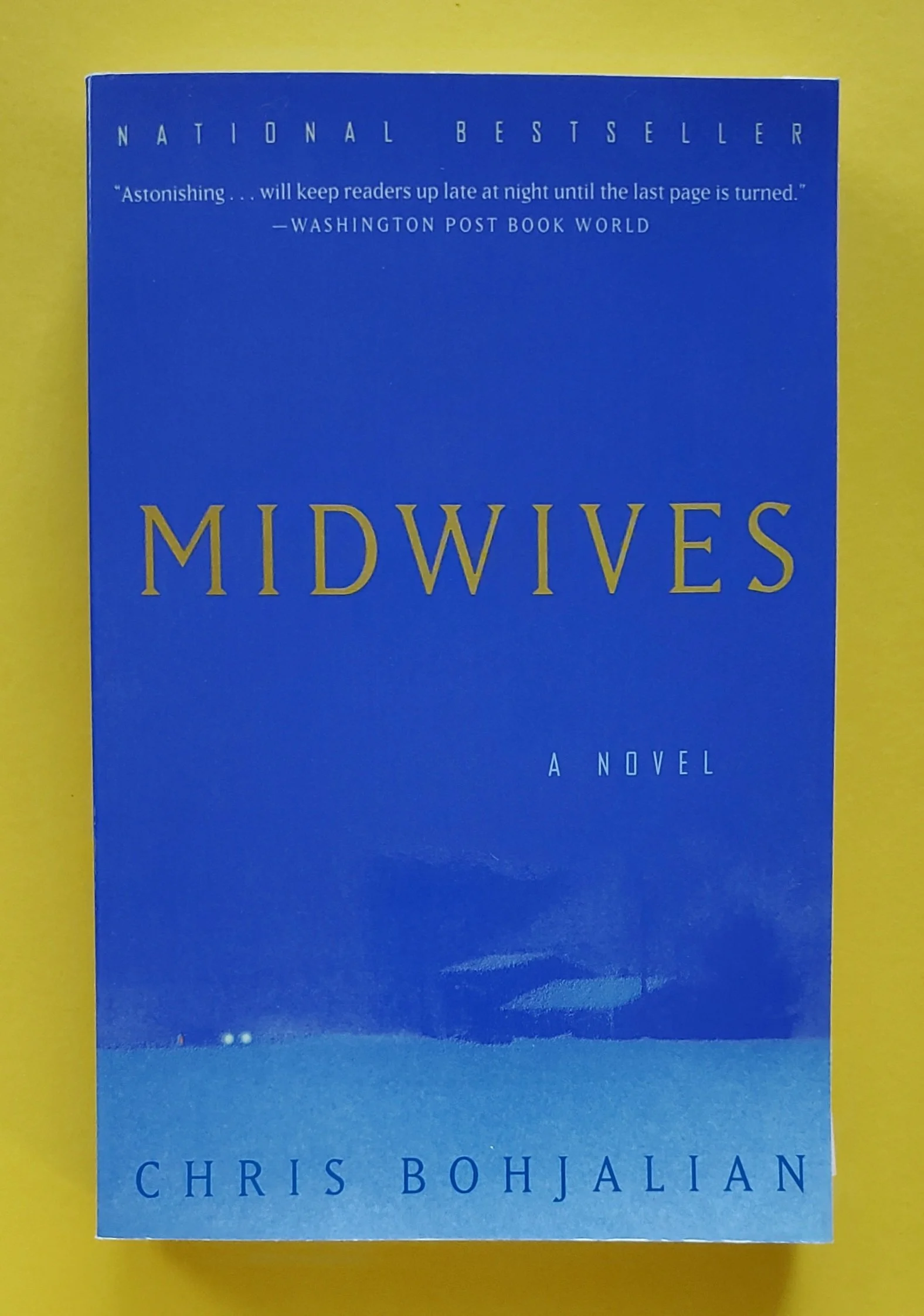 Image 1 of 4
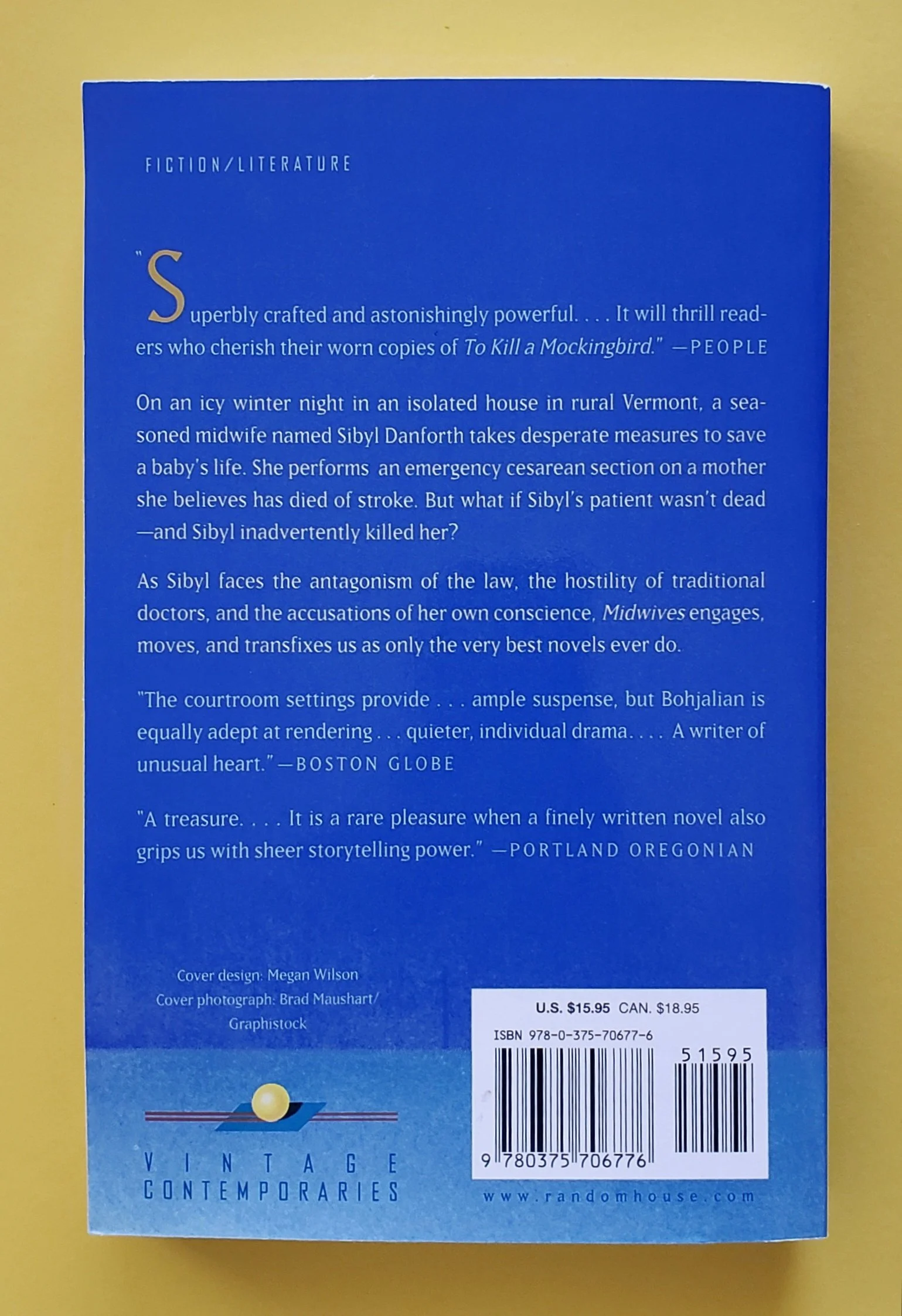 Image 2 of 4
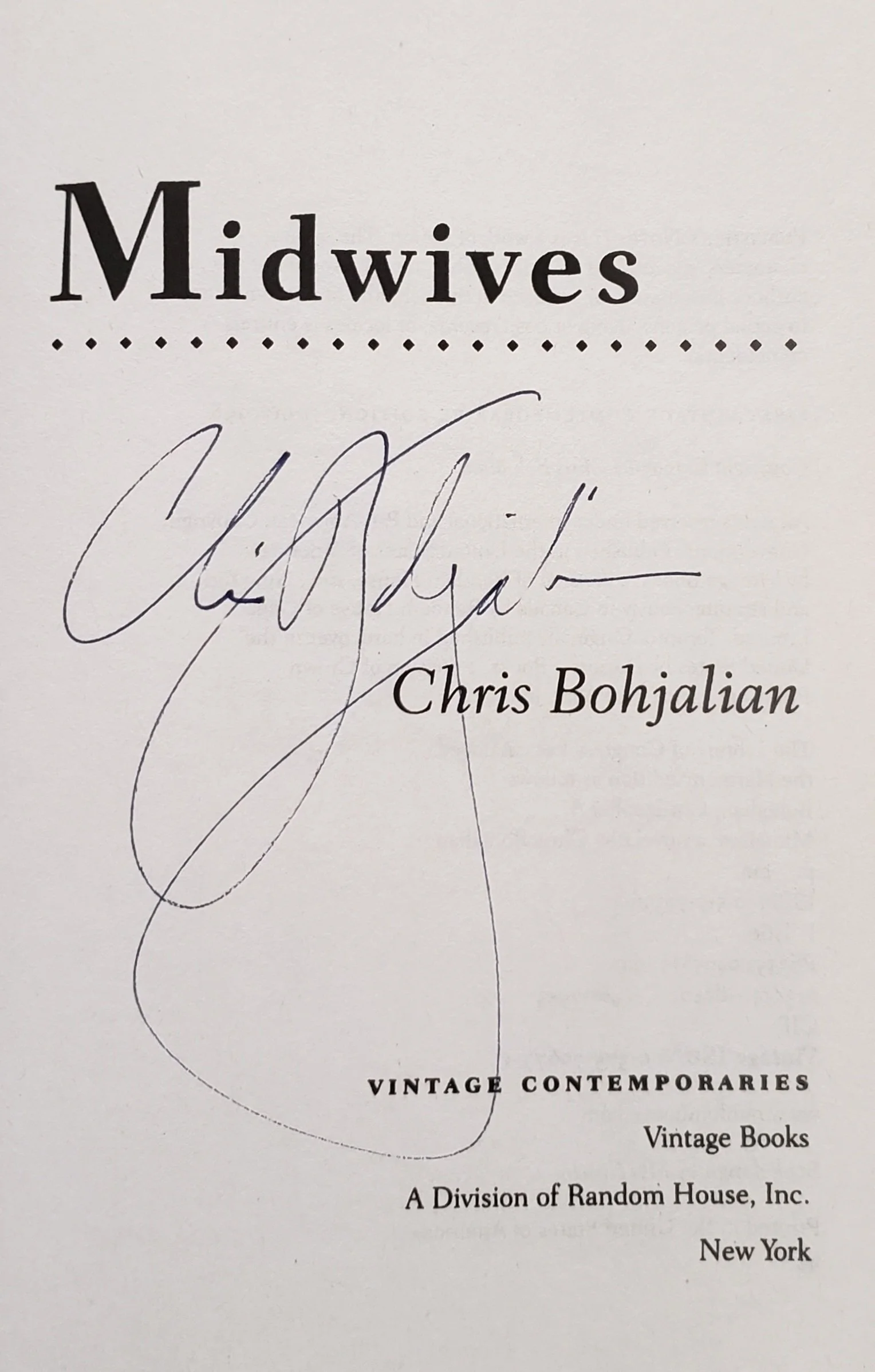 Image 3 of 4
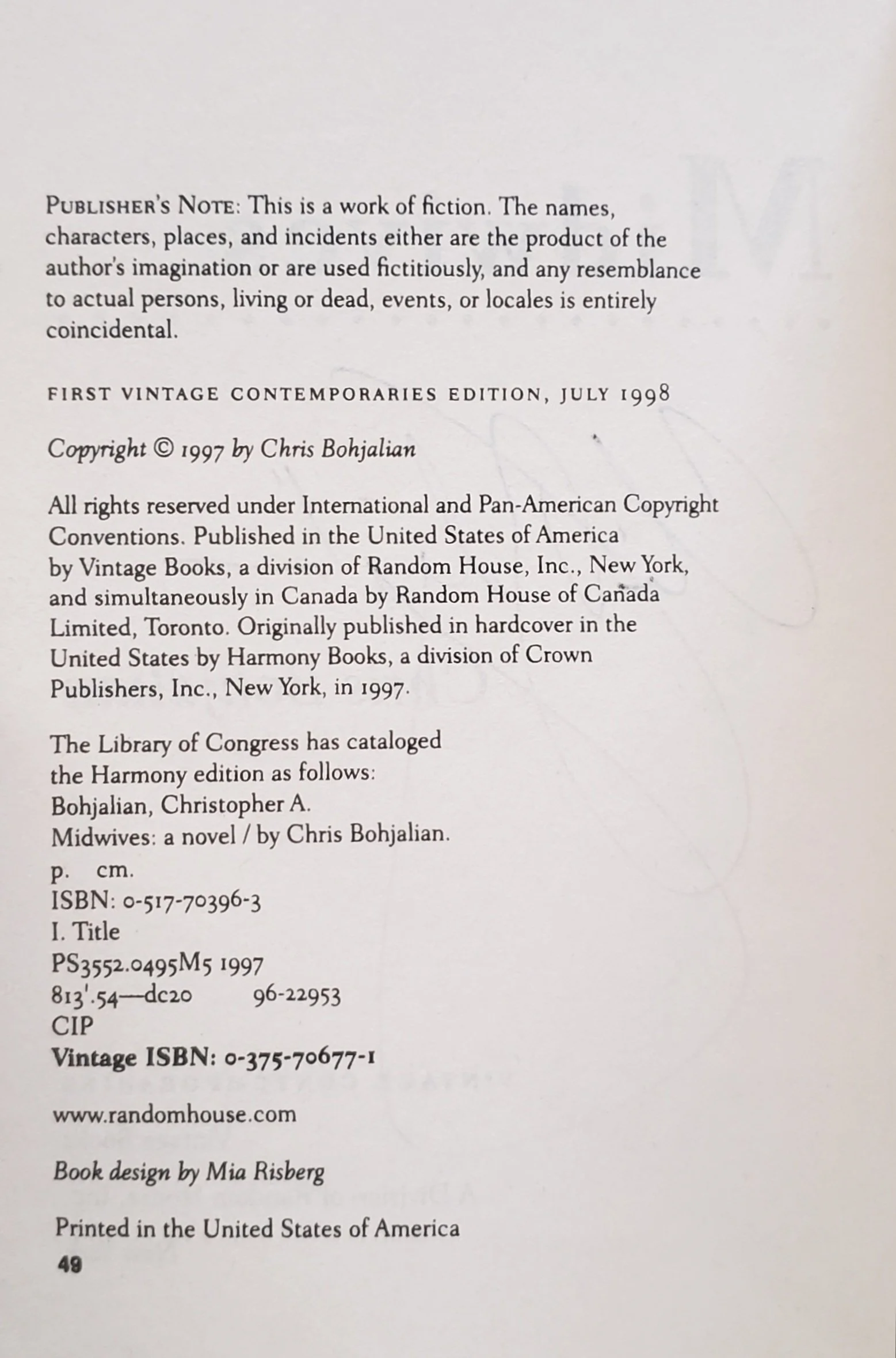 Image 4 of 4