
 Image 1 of 5
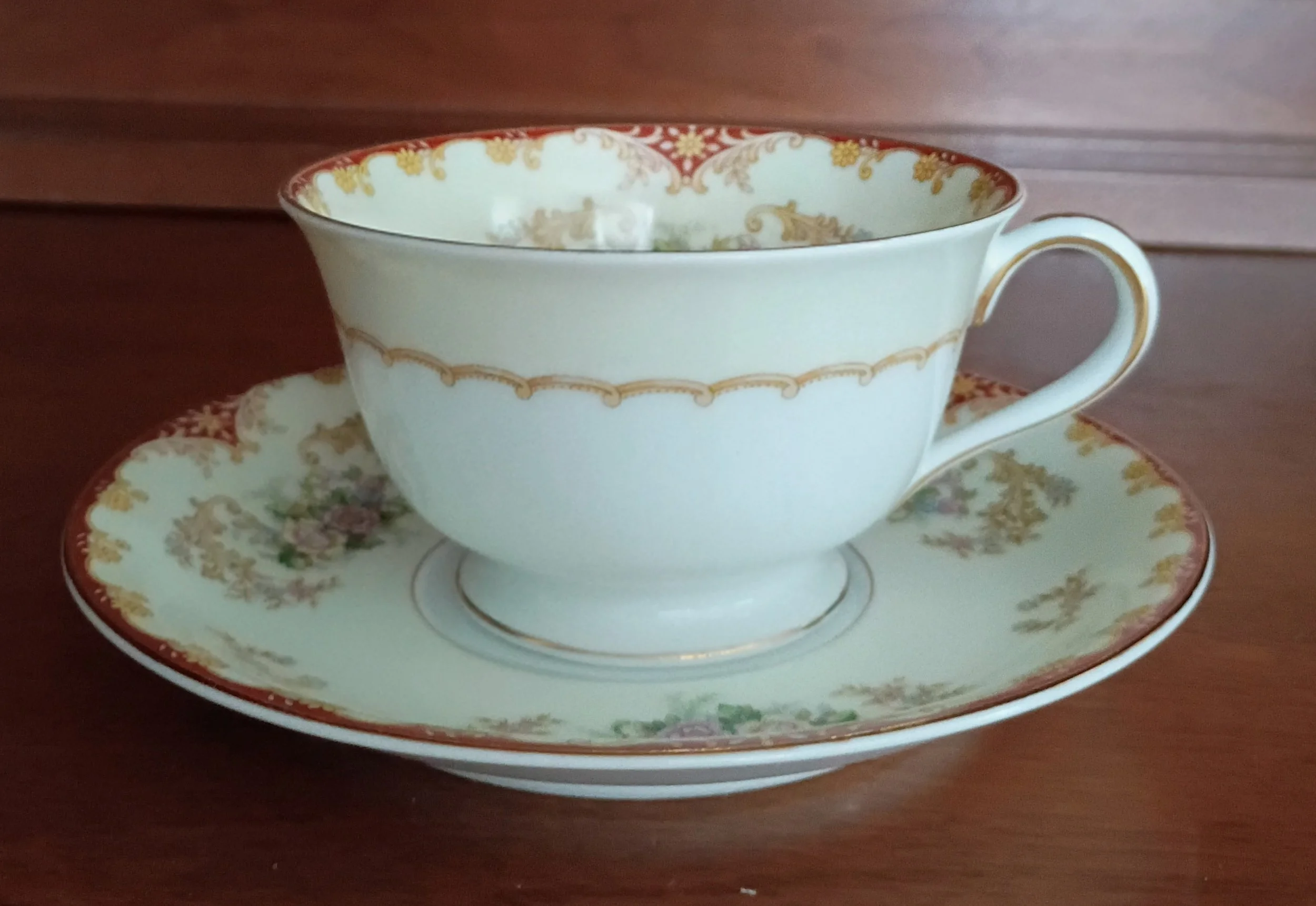 Image 2 of 5
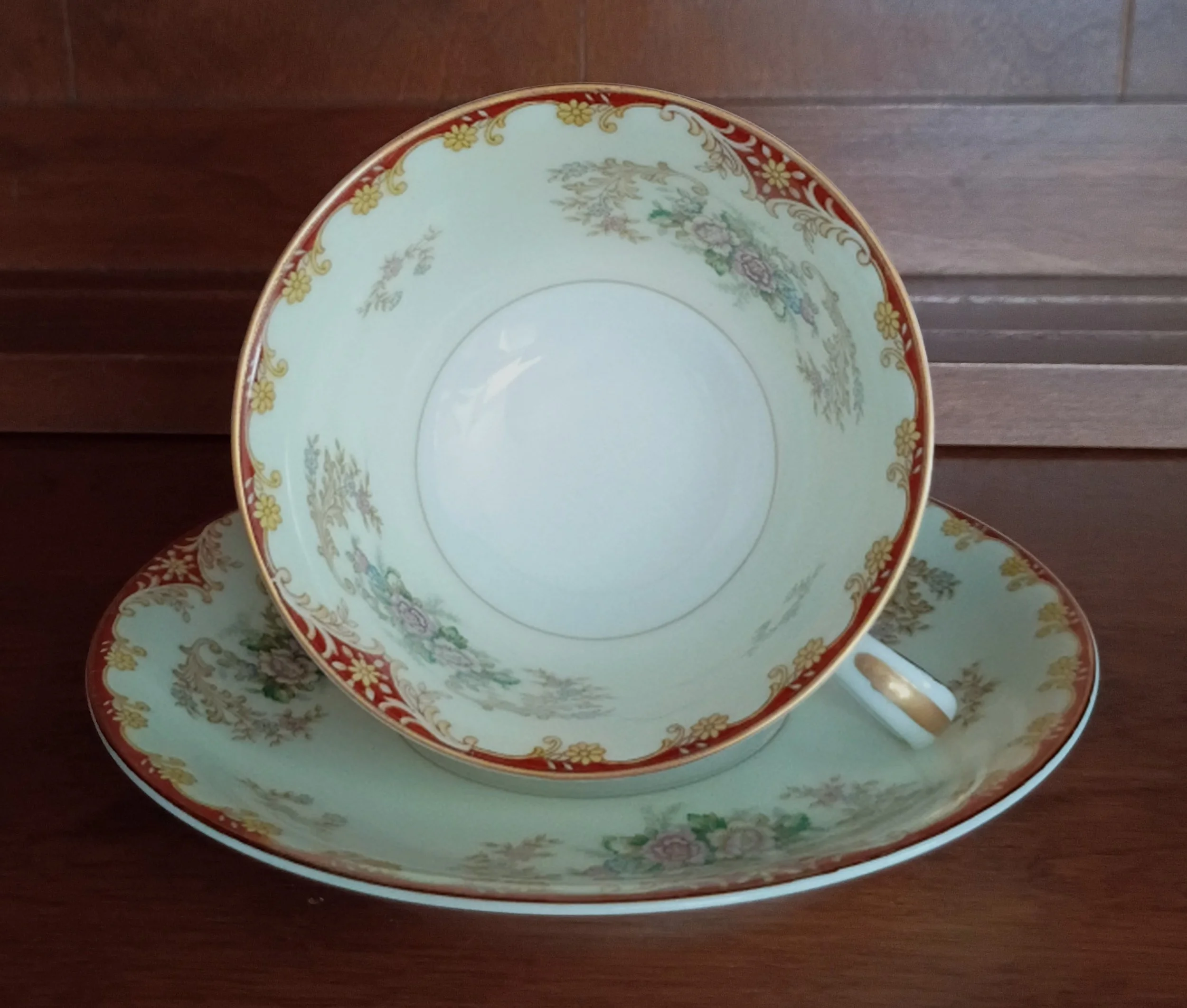 Image 3 of 5
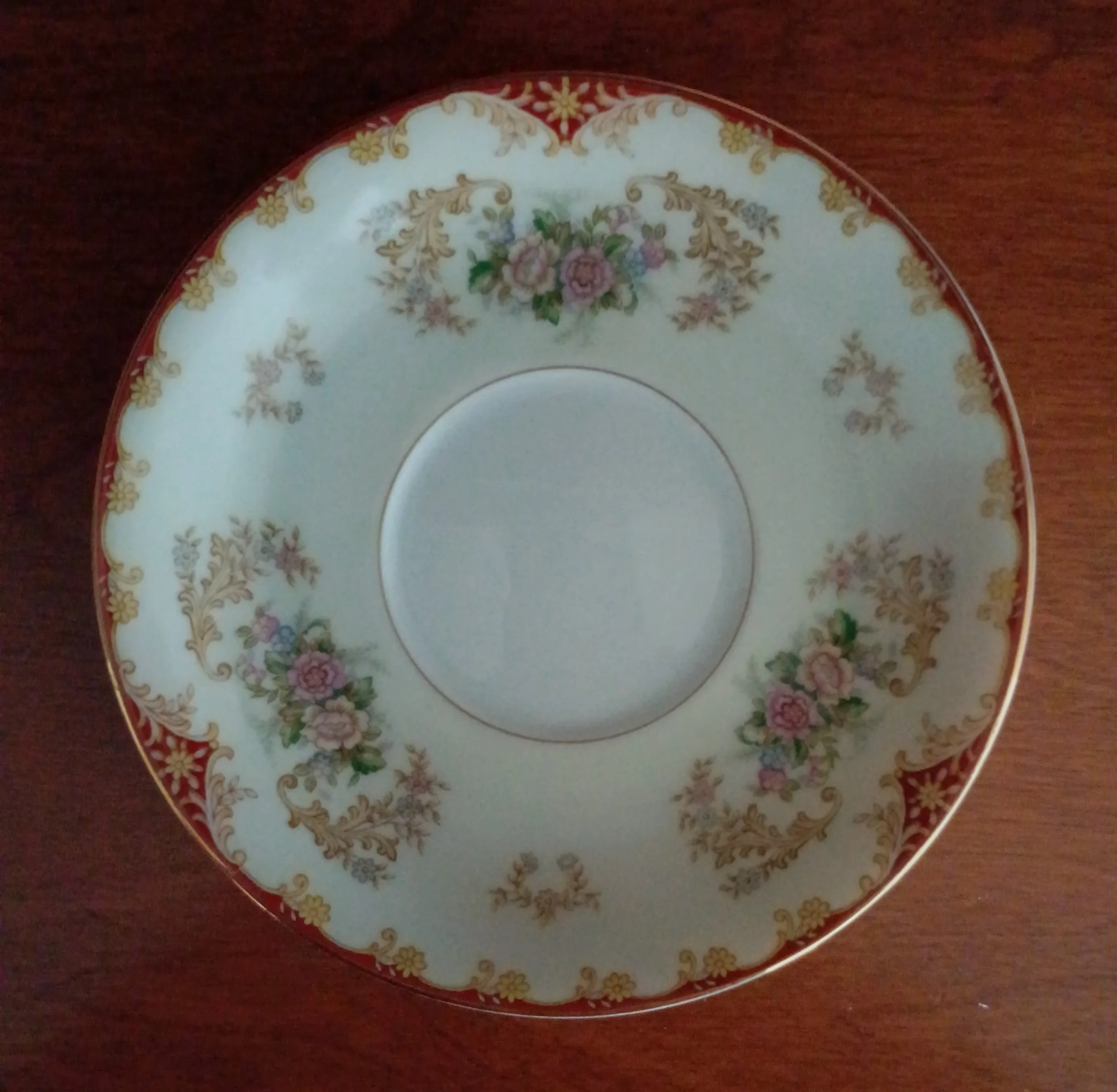 Image 4 of 5
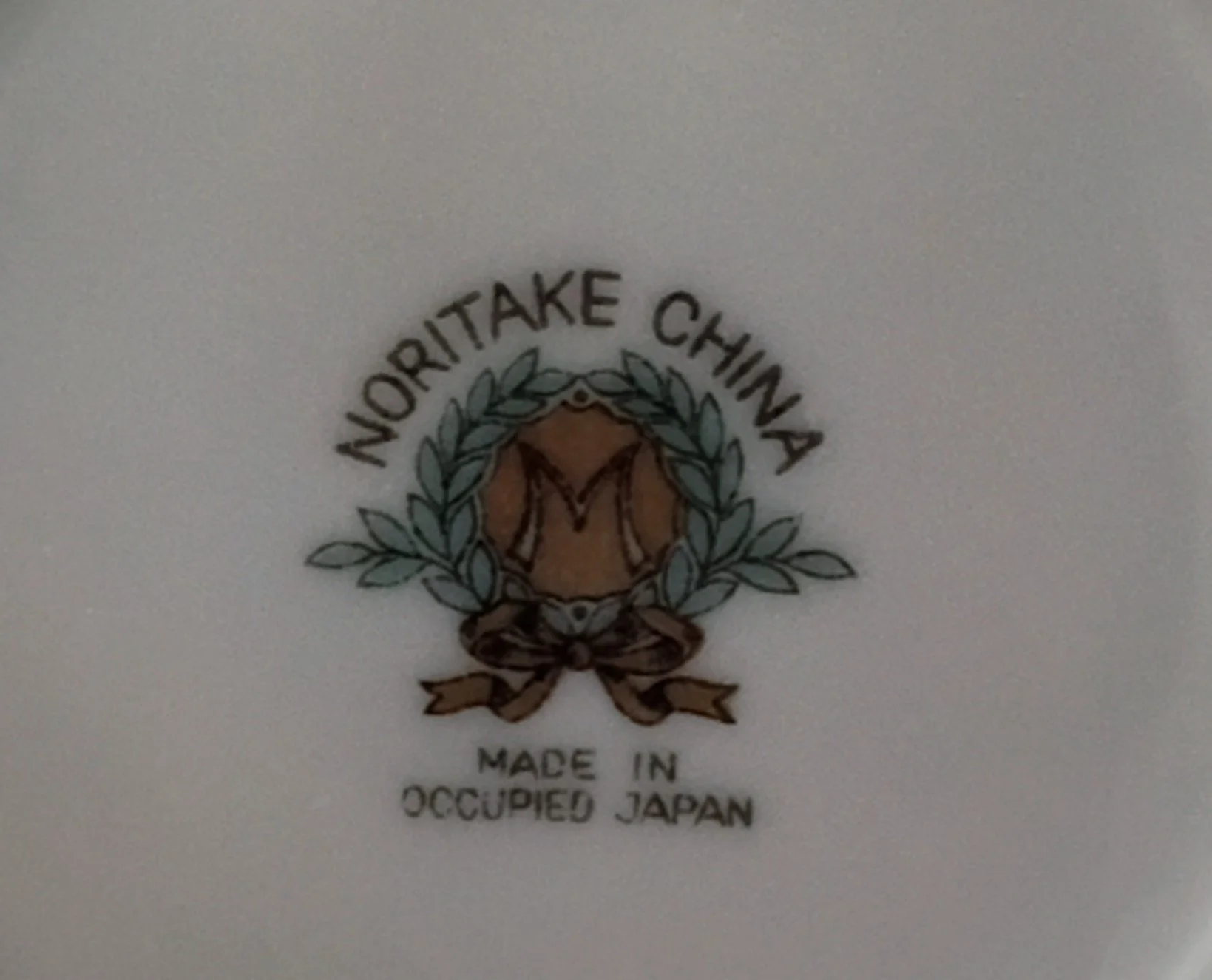 Image 5 of 5
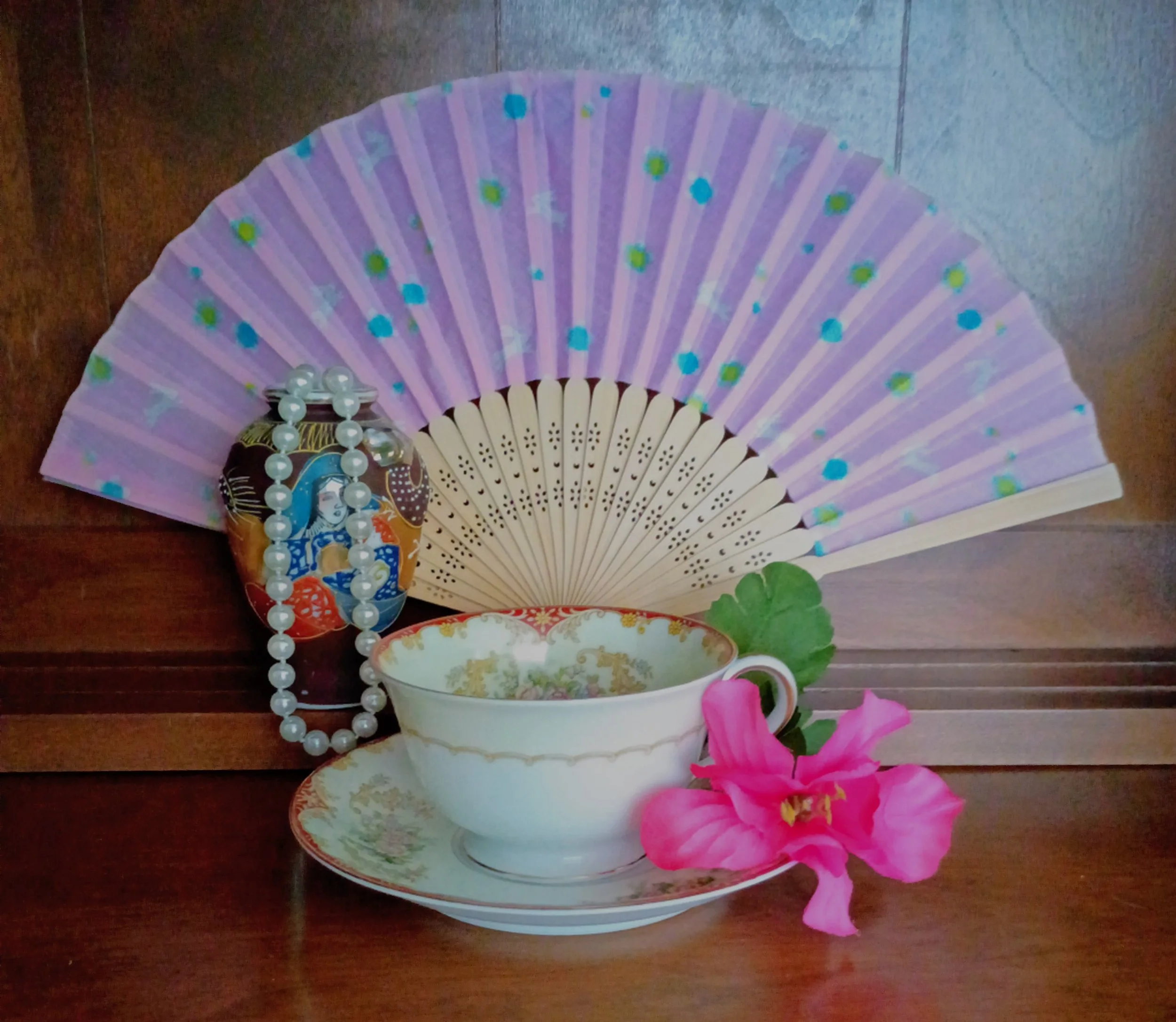
A must have for collectors of vintage and Occupied Japan porcelain. Crafted in Japan circa 1947 and stamped “Made in Occupied Japan,” this vintage footed teacup and saucer in the Cardinal pattern features the Bridgerton style and showcases delicate blush-pink roses, distinctive red outer borders, and intricate gilded gold scrollwork trim.
The footed teacup measures 2 1/8 inches high and the saucer measures 5 1/2 inches across.
The set is in pristine condition with no chips, cracks, or crazing. The gilded gold trim is intact. The images are sharp and the colors bright.
*Historical note: After Japan’s surrender in September 1945, the Allied Powers occupied Japan until 1952. In February 1947, the Supreme Commander for the Allied Powers (SCAP) issued a directive requiring that all goods manufactured in Japan and exported abroad be marked to indicate they came from “Occupied Japan”. This was to prevent confusion with pre-war Japanese production and to reflect the political status of Japan at the time. The requirement was formally lifted in December 1949, but many manufacturers continued using the mark until the occupation ended in 1952.
A must have for collectors of vintage and Occupied Japan porcelain. Crafted in Japan circa 1947 and stamped “Made in Occupied Japan,” this vintage footed teacup and saucer in the Cardinal pattern features the Bridgerton style and showcases delicate blush-pink roses, distinctive red outer borders, and intricate gilded gold scrollwork trim.
The footed teacup measures 2 1/8 inches high and the saucer measures 5 1/2 inches across.
The set is in pristine condition with no chips, cracks, or crazing. The gilded gold trim is intact. The images are sharp and the colors bright.
*Historical note: After Japan’s surrender in September 1945, the Allied Powers occupied Japan until 1952. In February 1947, the Supreme Commander for the Allied Powers (SCAP) issued a directive requiring that all goods manufactured in Japan and exported abroad be marked to indicate they came from “Occupied Japan”. This was to prevent confusion with pre-war Japanese production and to reflect the political status of Japan at the time. The requirement was formally lifted in December 1949, but many manufacturers continued using the mark until the occupation ended in 1952.